Best Electric Piano: What to Check Before You Choose
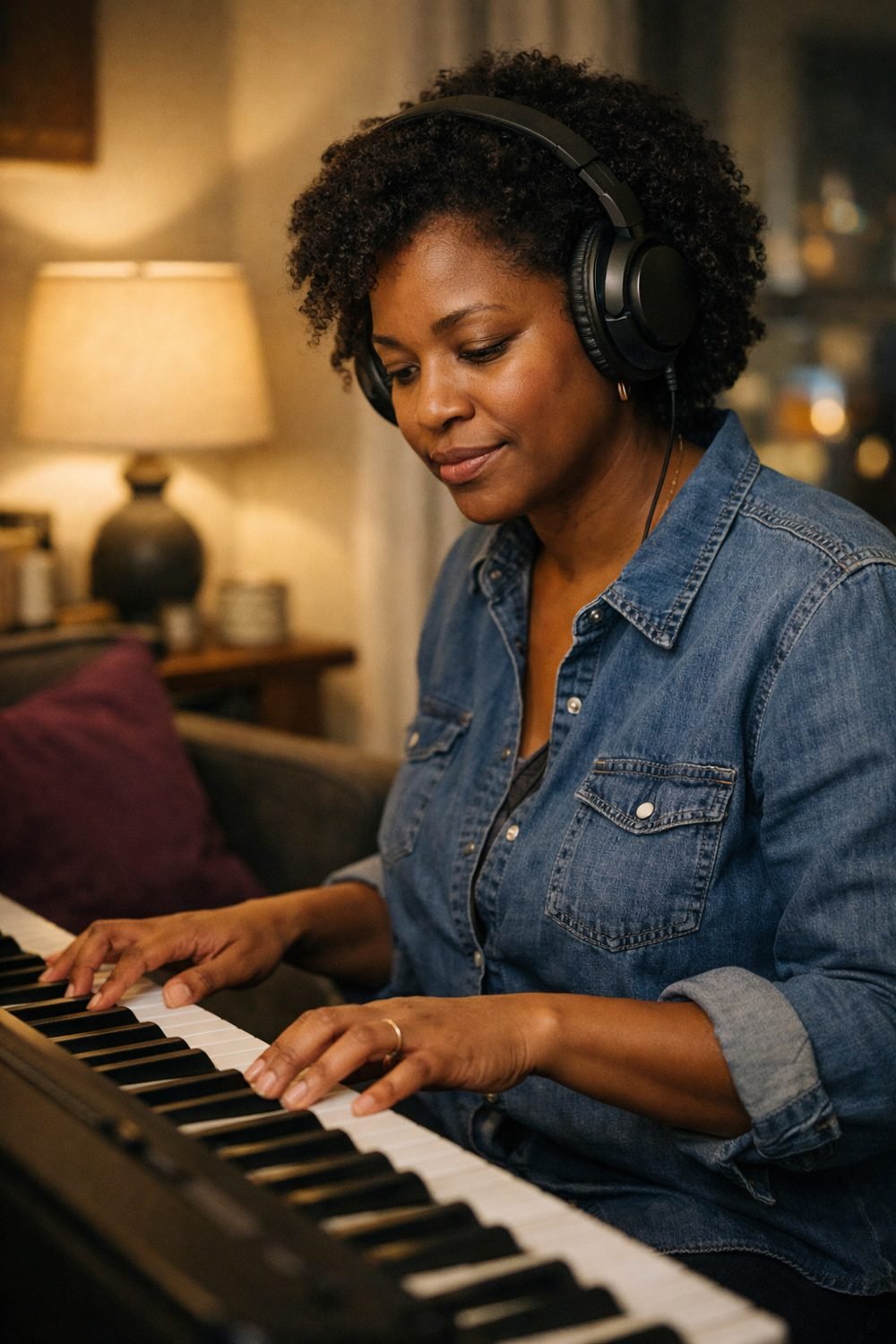
The best electric piano for you needs the right keys and the right connections. Almost everything else is a bonus. It is easy to learn this the slow way by buying what is really a cheap keyboard that feels like pressing on plastic tiles. Many people end up selling a poor first purchase and starting over.
This list covers what I'd check before spending money. It isn't a ranking of brands. It's a set of questions to ask about any model you're looking at, so you can read a product page and know what actually matters.
Short on time? Our top picks: Yamaha P-45, Casio Casiotone CT-S300, Roland FP-10 and Casio Privia PX-S1100. See all picks

1. Key Action: How the Keys Feel on a Digital Piano
This is the big one. Key action is how the keys push back when you press them. A real acoustic piano has heavy keys that spring back up, and many electric pianos try to copy that with "weighted" or "hammer action" keys.
Unweighted keys feel light and springy, like an organ or a basic keyboard. They're fine for messing around with beats or learning chord shapes. But if you or your kid might ever play on a real piano, weighted keys build the finger strength you'll need. Going from light keys to a heavy acoustic piano feels a bit like switching from a bike to a rowing machine.
You'll also see "semi-weighted," which sits in the middle. Some people love it. It can feel a little vague, honestly.
Tip: If you can, play one in a shop before buying, even if you end up ordering online. Press a key slowly, then quickly. You'll feel the difference between models in about ten seconds.
2. Number of Keys
A full piano has 88 keys. Many electric piano keyboard models have 88 too, but smaller ones come with 61 or 76.
If you're shopping for the best digital piano for beginners, 61 keys can work for a while. Plenty of early songs stay in the middle of the keyboard. The trouble shows up later, when a piece needs low bass notes or high notes and you simply run out of keys.
If you have the space, I'd go for 88. It's one of those things you can't upgrade later without buying a whole new instrument.
Tip: Measure your wall before you fall for a model. An 88-key piano is usually a bit over four feet wide, but check the exact size on the seller's page.
3. The Sounds Your Electric Piano Comes With
Product pages love to brag about hundreds of sounds. Strings, choir, synth, a dog barking. It sounds fun, and it is fun for about an afternoon.
What you'll actually use most is the main grand piano sound. So listen to that one closely. Does it sound full, or thin and tinny? Do soft notes sound soft, and loud notes sound loud? A good piano sound changes as you play harder, not just in volume but in tone.
A nice electric piano tone and a decent organ are handy extras. Beyond that, I wouldn't pay more just for a longer sound list.
Tip: Search for video demos of the exact model and listen with headphones, not phone speakers. Phone speakers make almost everything sound the same.
4. Polyphony (Don't Skip This One)
Polyphony is how many notes the piano can play at once. It sounds like a nerdy spec, and it kind of is. But it matters more than you'd think.
When you hold the sustain pedal, notes keep ringing while you play new ones. On a piano with low polyphony, older notes can suddenly cut off. You might not notice when playing simple tunes. You'll notice when you try something with lots of pedal.
Higher numbers are generally safer for piano playing. The exact figure will be on the spec sheet for each model, so compare them side by side.
Tip: If two pianos feel about the same, use polyphony as a tie-breaker.
5. Built-In Speakers
Most electric pianos have speakers built in, but they vary a lot. Some are loud and clear. Some sound like a radio in another room.
If you'll mostly play with headphones, this matters less. Lots of people do that, especially in apartments or with family asleep. Playing with headphones late at night is a good habit, and neighbors will appreciate it.
But if you want to play for friends, or you just like hearing the room fill up, good speakers make practice more enjoyable. And enjoying practice is half the battle.
Tip: Check that it has a headphone jack. It sounds obvious, but confirm the type and whether you'll need an adapter for your headphones.

6. Pedals: What's Actually in the Box
Many electric pianos come with a single sustain pedal. Often it's a small, flat plastic one that slides around on the floor. It works, but it doesn't feel much like a real piano pedal.
Some models, including a white digital piano with a matching cabinet, come with a three-pedal unit, like an acoustic piano. Others let you add one later. For most beginners, one decent sustain pedal is plenty. The other two pedals come up less often until you get further along.
You can skip upgrading to three pedals right away unless you already know you need them. A better single pedal is a cheaper fix that makes a real difference.
Tip: Read the listing carefully to see if a pedal is included at all. Some bundles include it, some don't.
Quick side note: if you like keeping track of new hobbies on paper, our free Junk Journal Starter Pages (tags, a pocket and a cover) make a nice little practice log, and you can grab them through the sign-up box on this page.
7. Connections: USB, MIDI and Audio Out
This is the other half of what I said at the start. Connections decide what you can do with the piano beyond just playing it.
A USB port usually lets you connect to a computer or tablet. That opens up learning apps, recording software and extra sounds. Older-style MIDI ports do a similar job and still show up on some models. Audio outputs let you plug into a bigger speaker or recording gear.
If you think you might ever record yourself, even just a phone video for family, check these ports now. It's annoying to discover later that your piano can't talk to your laptop. Some people go further and set up a camera to film their playing. If that's you, the Mirrorless Cameras Buyer's Guide and Comparison Sheets below this post might save you some head-scratching when you get there.
Tip: Look up whether the piano needs a special cable or adapter for your device. Check the seller's page or the maker's manual rather than guessing.
8. The Stand (and Where You'll Sit)
Some electric pianos come with a furniture-style stand that looks like a small upright piano. Others come with nothing, and you'll need to buy a stand separately.
The furniture-style ones are steady and look nice in a living room. The downside is they're harder to move. A simple X-stand is cheap and folds up, but it can wobble when you play hard. If you play loud chords, check how stable the stand feels, since some setups wobble a bit under heavy playing.
Don't forget the seat. A kitchen chair is usually the wrong height. A basic adjustable bench helps your posture more than you'd expect.
Tip: When comparing an electric piano for sale against a used digital piano, add the cost of a stand and bench if they're not included. A "cheaper" piano can end up costing the same.
9. Size, Weight and Where It Will Live
Think about where the piano will go before you order. A portable model can be carried to a lesson or tucked away. A cabinet-style one is basically furniture.
If you move often or share a small space, portable makes sense. If it's staying put in one room for years, a heavier model can feel more solid and more like a "real" instrument. It also nags you to practice just by sitting there.
Tip: Check the weight on the listing and think about stairs. Carrying a heavy box up three flights is a memory I'd rather not repeat.
Electric Piano Picks Worth a Look
These are well-known models and tools that fit the checklist above. Use them as starting points to compare, not as a final answer.
Yamaha P-45
A long-running, compact digital piano that suits beginners who want weighted keys without a big footprint. Check whether the pedal and power supply come in the box, and whether a stand is sold separately.
Casio Casiotone CT-S300
A lighter keyboard that suits people who want lots of sounds and an easy-to-carry instrument. Check the key feel carefully, as it is not aimed at players who want a heavy, piano-style touch.
Roland FP-10
A portable digital piano that suits students who want a piano-style feel in a small body. Look at the pedal that comes with it and think about what stand you will use.
Casio Privia PX-S1100
A slim digital piano that suits small rooms and players who like a modern look. Check the speaker setup and the connection options against how you plan to practice and record.
Kawai ES120
A portable digital piano that suits players who care most about how the keys feel. Compare the weight and size with your space, and see whether a stand and bench are extra.
Donner DEP-20
A budget-friendly option that suits first-time buyers wanting weighted keys on a tight spend. Read the listing closely to see what accessories are included and what the warranty covers.
Simply Piano
A learning app that suits beginners who want guided lessons on any piano or keyboard. Check which connection methods it supports and whether the plan you want needs a subscription.
Check current plans and prices on each brand's own site before you buy.
FAQ
Do I really need weighted keys as a beginner?
Not always, but I'd lean that way if you plan to learn proper piano. Weighted keys build the finger control you'll use on any piano later. If you just want to play chords for fun, lighter keys can be fine.
Is an electric piano the same as a keyboard piano?
People use the words loosely. Usually "electric piano" or "digital piano" means something built to feel and sound like a piano, with weighted keys. "Keyboard" often means a lighter instrument with lots of sounds and fewer piano-like features.
Can I learn with apps on an electric piano?
Many models work with learning apps such as Simply Piano through USB or another connection. Check the app's own page for which pianos it supports. Some apps also listen through your device's microphone, which works with almost anything.
How long will an electric piano last?
That depends on the model and how it's treated, so I can't give you a number. Keep it away from heat, damp and drinks, and cover it when you're not playing. The seller's page should list any warranty details.
Where to Go From Here
Whether you're eyeing a digital piano for sale or a second-hand find, pick the two or three things on this list that matter most to you. For most people, that's key action, number of keys and connections. Then compare a few models only on those points before you get distracted by sound lists. If you'd like a simple place to jot down your notes and practice days, grab the free Junk Journal Starter Pages from the sign-up box first. After that, have a look at the products below this post. The Photo Shoot Planner and Checklist Bundle is handy if you ever want to film your playing and keep the setup organized.
Printables and tools that can help
Mirrorless Cameras Buyer's Guide and Comparison Sheets
A printable guide and comparison sheets to write down what matters to you before you look at any seller...
See detailsPhoto Shoot Planner and Checklist Bundle
A printable bundle with a 30-day goal page, weekly planner and checklists for new creators and...
See details