Best Earphones for Running: Pros, Cons and Alternatives

It's easy to lose an earbud down a storm drain. A wired pair can yank out of your ears when your arm catches the cable mid-stride. And I've run a whole 10K with music so quiet I could barely hear it because I didn't want to miss cars coming up behind me. So when people ask me what the best earphones for running are, my honest answer is that there isn't one perfect type. Every style trades one problem for another.
What I can do is walk you through the main types, what I liked, what drove me nuts, and who each one actually suits. This post doesn't name a single "winner" brand or quote prices, because those change all the time. Check the seller's page for current specs, fit sizes and return rules before you buy anything.
Short on time? Our top picks: Shokz OpenRun, Beats Powerbeats Pro, Jabra Elite 8 Active and Soundcore by Anker Sport X10. See all picks
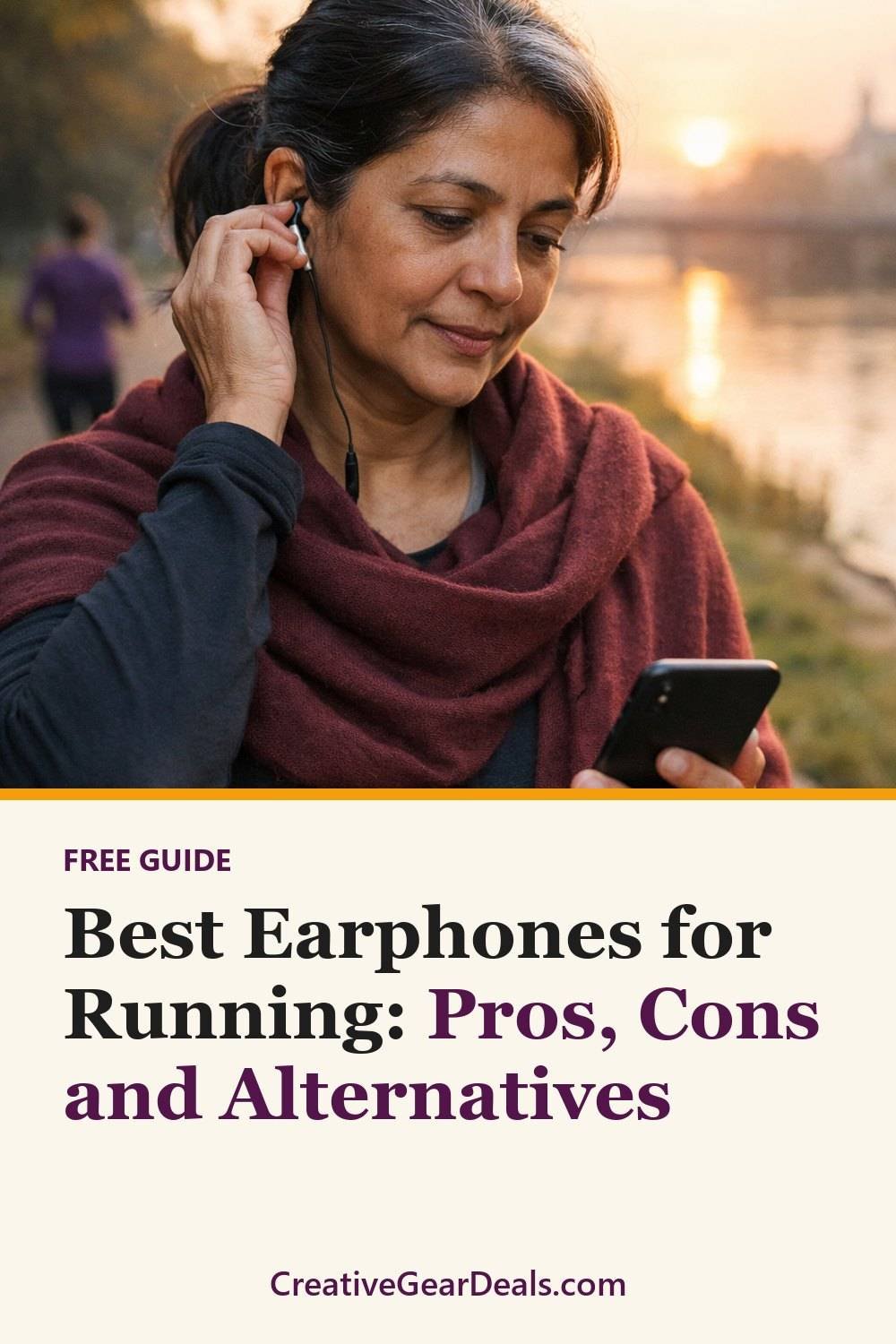
1. Wireless Earphones and Earbuds
These are the small, totally cable-free wireless earphones most people picture first. The big plus is freedom. Nothing tugs at your ears when you swing your arms, and they slip into a pocket-sized case when you're done. For short runs on a treadmill or a calm route, they're lovely.
The downside is the obvious one: they can fall out. Sweat makes them slippery, and if your ear shape doesn't match the tips, a bouncy downhill stretch can pop one loose. Battery life is another thing to watch. A long weekend run plus a forgotten charge the night before is a bad combo. Many runners learn that the hard way somewhere around mile eight.
Practical tip: Try every ear tip size that comes in the box, not just the medium ones already fitted. A slightly bigger tip often seals better and stays put. Then jog in place for a minute and shake your head before you trust them outside.
2. Wired Running Earphones
People call wired earphones old-fashioned, and I think that's a bit unfair. You never have to charge them. They're usually light, and if you lose a pair, it tends to hurt your wallet less than losing wireless ones. Sound can be very good for the size too.
The trouble is the cable. It tangles in your pocket, bounces against your chest and makes a thumping noise that travels right into your ears (people call this "cable noise"). It can also catch on your arm and pull the buds out. And many newer phones don't have a headphone jack, so you might need an adapter, which is one more small thing to lose.
Practical tip: Run the cable under your shirt and clip it to your collar. It cuts down on bouncing and noise a lot. A cheap clothing clip works if your pair didn't come with one.
3. Ear-Hook Models
If you're hunting for the best earbuds for running and yours keep falling out, this is where I'd look next, with the Beats Powerbeats Pro as one well-known example. Ear-hook earphones have a curved piece that wraps over the top of your ear. That hook holds everything in place, so even sprints and hill repeats don't shake them loose. For me, these were the first ones I stopped thinking about mid-run, which is really the goal.
They are bulkier, though. The case is often bigger, they don't sit as neatly in a pocket, and if you wear glasses or sunglasses, the hooks and the arms of your glasses can fight for the same spot. Some people find them a little sore after an hour or more. Others never notice. It really depends on your ears.
Practical tip: Put your sunglasses on first, then the ear hooks, and see how it feels after ten minutes of walking around the house. If it pinches at home, it'll pinch worse at mile five.
Side note: if you like tracking your runs on paper, our free gift for joining the email list, the Free Junk Journal Starter Pages with tags, a pocket and a cover, makes a fun little running log.
4. Bone-Conduction Running Headphones
These are the strange-looking ones that rest on your cheekbones instead of going into your ears. They send sound through small vibrations, so your ear canals stay open. The big reason runners like them, with the Shokz OpenRun as a well-known example, is safety. You can still hear traffic, bike bells, dogs and other runners saying "on your left."
The sound deserves an honest word. Bass is weaker, and in noisy places like a busy road, the music can get drowned out. If you turn them up high, the buzzing can feel a bit tickly on your face. They're great for podcasts and audiobooks. For music where you want that big, thumping beat, they can sound a little flat.
Practical tip: Some people pop in simple foam earplugs when they use bone-conduction on a treadmill or indoors. It makes the sound fuller. Just take them out when you run outside, or you lose the whole point.
5. Neckband Earphones
A neckband has a soft band that sits around the back of your neck with short wires running to each bud. The battery and controls live in the band. It's a simple setup, and the nice part is that if a bud falls out, it just dangles. It doesn't roll into the road.
The weak spot is heat. On a hot day, a band sitting on the back of your sweaty neck isn't pleasant. It can also bounce a bit on longer runs unless it fits snugly. They suit cool morning runs and winter jogs, but in summer you may prefer to leave them at home. To me, neckbands feel a little overlooked. They're not flashy, but they're practical.
Practical tip: If you sweat a lot, wipe the band down after every run. Salt builds up fast and can make the material feel sticky or wear out sooner.
6. Open-Ear Earphones
Open-ear models sit just outside your ear canal, often with a small hook, and point the sound toward your ear rather than sealing it in. Like bone-conduction, they let you hear what's around you, and many people find the sound more natural than the best running headphones of that older style. For running on shared paths or near traffic, I think they're one of the smartest choices out there, and the Bose Ultra Open Earbuds are one example of the style.
The catch is sound leaking out. In a quiet gym or on a calm trail, people near you may hear a faint version of your music. That's not a big deal for most runners, but it's worth knowing. And like bone-conduction, they struggle in loud places, so city runners near busy roads may find themselves turning the volume up more than they'd like.
Practical tip: Test them at the volume you'd really use, then have a friend stand next to you. If they can hear the lyrics clearly, either turn it down or save that pair for outdoor runs.
7. Alternatives to Running Earphones
Sometimes the smartest choice is no earphones at all. That may sound odd on a gear site. But some of my favorite runs were the ones where I just listened to my breathing and the birds. If you run in risky areas, at night or on roads without sidewalks, going without is the safest option.
Other options people use:
- A small clip-on speaker at low volume, though it can annoy others on shared paths, or over ear headphones for working out if you only need them at the gym
- Your phone's speaker on a solo treadmill run at home
- Sport headbands with thin built-in speakers, which some runners like in cold weather
Practical tip: Rotate. You could keep one secure pair for hard training days and one open-ear pair for easy runs near traffic. It's not about owning lots of gear, just matching the tool to the run.
And if you ever want to take photos of your favorite routes or a race day, we have a Mirrorless Cameras Buyer's Guide and Comparison Sheets, plus a Photo Shoot Planner and Checklist Bundle, below this post. Totally optional, just there if it's your kind of thing.
Our top picks
Here are some well-known earphone options that match the styles above, so you have real names to look up. Fit and comfort vary a lot by ear shape, so read the seller's details before choosing.
Shokz OpenRun
Suits runners who want bone-conduction and need to hear traffic and other people. Check how the sound feels at your usual volume, since bass is lighter than with sealed earbuds.
Beats Powerbeats Pro
A popular ear-hook style for runners whose buds keep falling out. Check how the hooks sit with your glasses and whether the case size works for you.
Jabra Elite 8 Active
Suits people who want a sealed wireless earbud made with active use in mind. Try the different tip sizes and read the seller's page for the water resistance details.
Soundcore by Anker Sport X10
Worth a look if you want a rotating ear-hook design from a brand known for budget-friendly audio. Check the fit on your ears and the return policy first.
Bose Ultra Open Earbuds
An open-ear clip-style pick for runners who want awareness of their surroundings. Check how they feel after a longer wear and how much sound leaks out in quiet places.
JLab Go Air Sport
A simple wireless option for casual runners who want to keep things easy. Check the fit carefully, since sweaty runs are where loose buds show up.
Jaybird Vista 2
Suits runners who want a secure-fitting sport earbud with wing-style stability. Check the tip and wing sizes, and confirm the battery details on the product page.
Check current plans and prices on each brand's own site before you buy.
FAQ
What type of earphones stays in best while running?
Ear-hook models tend to stay put best because the hook holds them over your ear. Wireless buds with a good tip fit can work well too. Fit varies a lot by ear shape, so check the seller's return policy before you buy.
Are bone-conduction or open-ear earphones safer?
Both leave your ears open, so you can hear traffic and people around you. That makes them a popular choice for outdoor runs. Still, any audio can distract you, so keep the volume low and stay alert.
Do I need sweat-resistant earphones?
If you sweat a lot or run in the rain, it's worth looking for a sweat or water resistance rating on the product page. The ratings mean different things, so read what the seller actually says it covers. Wiping your earphones dry after runs helps them last longer either way.
Is it okay to run with loud music?
Keep the volume low enough to hear what's around you. If you have concerns about your hearing, a doctor or hearing specialist is the right person to ask.
If you only take one thing from this, let it be this: choose the style based on where you run and what keeps falling out, not on hype. Grab the free Junk Journal Starter Pages through the sign-up box so you can start a little running log, then have a look at the guides below this post if photos are part of your runs too. Happy running, and hold on to those earbuds.
Printables and tools that can help
Mirrorless Cameras Buyer's Guide and Comparison Sheets
A printable guide and comparison sheets to write down what matters to you before you look at any seller...
See detailsPhoto Shoot Planner and Checklist Bundle
A printable bundle with a 30-day goal page, weekly planner and checklists for new creators and...
See details