Best Digital Piano: What to Check Before You Choose
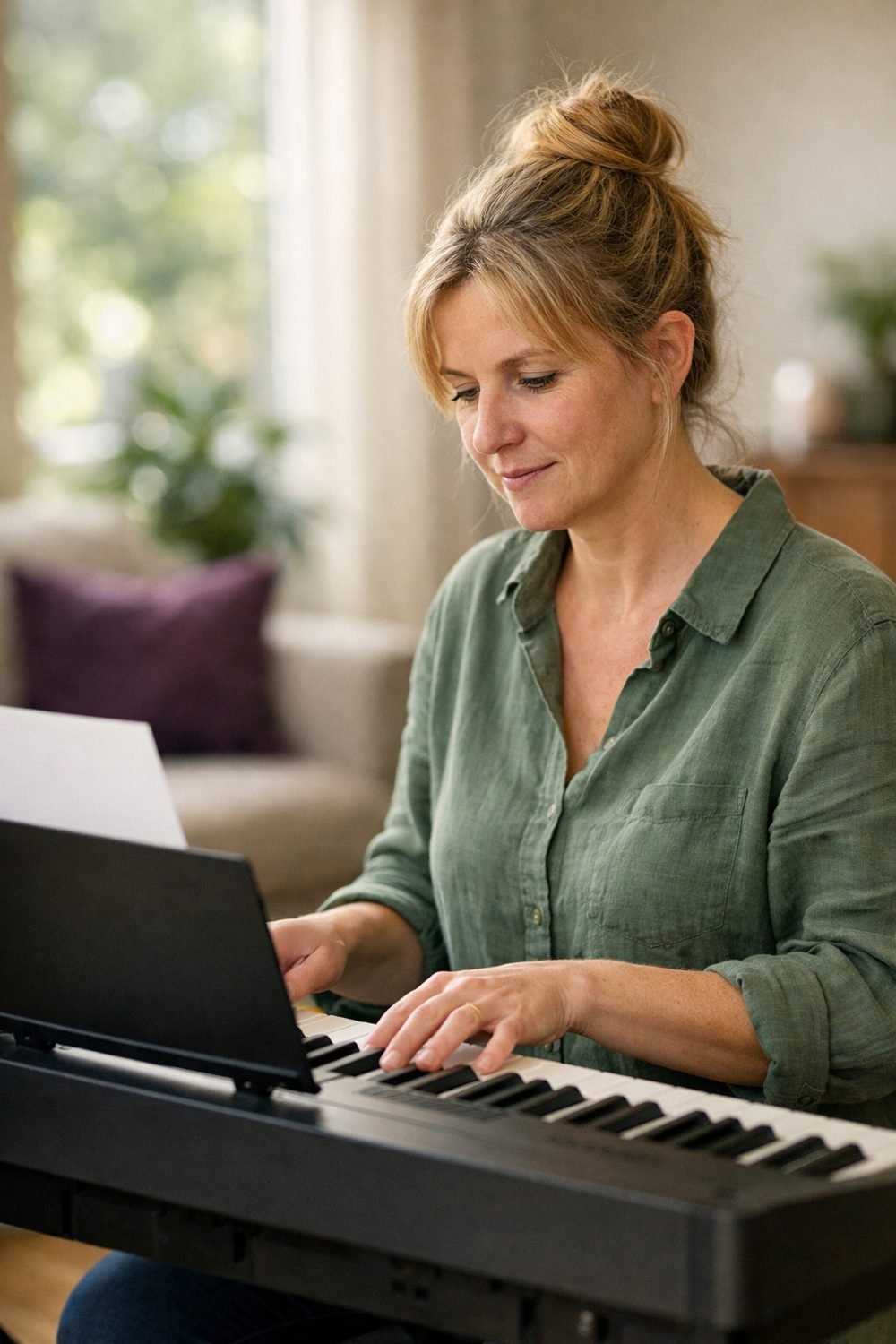
The best digital piano should feel good under your fingers. That sounds obvious, but it's the part most people skip when they're staring at a page full of specs and model numbers.
Some cheap keyboards look great in photos but feel like pressing on plastic lunchboxes. Modest, plain-looking pianos can also be the ones that make you want to practice every night. The difference usually comes down to a handful of things you can check before you buy. Here's what I look at when choosing a digital piano for beginners, in roughly the order I care about it.
Short on time? Our top picks: Yamaha P-45, Roland FP-10, Casio Privia PX-S1100 and Casio Casiotone CT-S300. See all picks

1. How the Keys Feel (Weighted Action)
On a real acoustic piano, the keys push back a little. Low notes feel heavier, high notes feel lighter. Good digital pianos copy this with what's called weighted or hammer action. Lighter "semi-weighted" or "synth-action" keys are easier to press but don't build the same finger strength.
If you or your kid plan to take lessons, or you ever want to sit down at a real piano without feeling lost, weighted keys matter more than almost anything else on this list. If you just want to mess around with sounds and make beats, you can get away with lighter keys.
Tip: Look for words like "graded hammer action" or "fully weighted" in the product details. If you can, try one in a store, even if you buy elsewhere. Ten seconds of playing tells you more than any review.
2. Number of Keys
A full piano has 88 keys. Many digital pianos have all 88, but some smaller models have 61 or 76 to save space and money.
Honestly, for the best piano for beginners who want to grow, I'd stretch for 88 keys if you're learning classical or pop. Beginner books stay in the middle for a while, but you'll hit songs that need the full range sooner than you think. A 61-key board is fine for a desk, a small apartment, or someone who mostly plays chords.
Tip: Measure your space before you fall in love with a model. An 88-key piano is a bit over four feet wide, and you need room to sit comfortably in front of it.
3. Polyphony (How Many Notes Can Sound at Once)
Polyphony is the number of notes the piano can play at the same time before it starts cutting some off. You'll see numbers like 32, 64, 128, or 192 listed.
This one sounds technical, but here's why it shows up in real life. When you hold the sustain pedal and play a lot of notes, they all keep ringing. Layered sounds use up notes too. With low polyphony, older notes can suddenly drop out, and it sounds a little choppy.
For a beginner, 64 is usually workable. If you use the pedal a lot or like playing big, flowing pieces, more gives you breathing room. It's not worth paying a lot extra just to chase the biggest number, though. Past a certain point, most people won't hear the difference.
Tip: Check the listed polyphony on the seller's spec page, not just the headline. It's often buried near the bottom.
4. The Piano Sound Itself
Lots of digital pianos brag about having hundreds of sounds: strings, organs, drums, choirs, a weird spaceship noise. That's fun for about a week. What you'll actually play most days is the main piano sound.
So that's the one to judge. Does it sound warm or tinny? Does it get louder and richer when you press harder, or does it just get louder? Listen to sample videos with headphones if you can't try one in person, and focus on quiet playing, not just loud showy demos.
Tip: Skip models that sell themselves mostly on sound count. Ten good sounds beat four hundred mediocre ones.
5. Speakers: Built In or Not
Most home digital pianos have speakers built in. Some stage pianos, made for gigging musicians, don't. They expect you to plug into an amp or PA system. That surprises a lot of first-time buyers.
If it's going in a living room or bedroom, you want built-in speakers. Small speakers can sound thin, especially in the low notes, so read what buyers say about the sound at normal volume. A piano that only sounds good cranked up isn't much use for evening practice.
Tip: If the listing says "stage piano" or "no speakers," double-check before ordering. It's an easy thing to miss and a hassle to fix later.

6. Pedals: Included or Not
A real piano has pedals, and the right one, the sustain pedal, gets used constantly. Many digital pianos come with a small square footswitch. It technically works, but it slides around on the floor and feels nothing like the real thing.
Better options are a piano-style sustain pedal (shaped like the real one) or a full three-pedal unit, which often comes built into furniture-style models. Some pianos also support "half-pedaling," which lets you press partway for a softer effect. That's a nice extra for more advanced players, not a must for beginners.
Tip: If the included pedal is the little square kind, plan on upgrading. A piano-style pedal is usually a small add-on and makes practice a lot more pleasant.
Quick side note: if you like keeping track of what you practice, our free Junk Journal Starter Pages (tags, a pocket, and a cover) make a surprisingly fun little practice log, and you can grab them by joining the email list.
7. Connections: Headphones and USB
A headphone jack might be my favorite feature on any digital piano. You can practice at 11 p.m. without bothering anyone. Check how many jacks there are, too. Two headphone outputs are handy for lessons, so a teacher and student can both listen.
USB is the other one to look for. With a USB connection, you can hook the piano up to a computer or tablet and use learning apps, recording software, or notation programs. Some pianos also have Bluetooth for audio or apps, which is nice but not something I'd treat as a dealbreaker.
If you think you might record yourself playing, maybe for a teacher, a family member, or just to hear your progress, plan the whole setup. If you're filming too, the Mirrorless Cameras Buyer's Guide and Comparison Sheets below this post can help you think through camera options without getting buried in jargon.
Tip: Look at the back panel photo before buying. It shows you exactly what plugs in where, which is clearer than most descriptions.
8. Stand and Bench: Included or Not
This one catches people off guard. Some digital pianos come as a full bundle with stand, bench, and pedals. Others are just the keyboard, and you're expected to buy the rest.
Furniture-style pianos come with their own built-in stand and usually look nicer in a home, and a white digital piano can brighten a room. Portable models need a separate stand. An X-shaped stand is cheap and folds up, but it can wobble when you play hard. A sturdier stand costs more but feels a lot more solid.
Don't skip the bench, either. Practicing on a kitchen chair for months can be hard on your back, so a proper seat matters. A bench at the right height helps your posture and makes longer practice easier.
Tip: When you compare piano price tags, add up the full setup. A "cheaper" digital piano for sale can end up costing more once you add a stand, bench, and decent pedal.
9. Size, Weight, and Where It Will Live
Think about whether this piano stays in one spot forever or moves around. Furniture-style pianos are heavy and stay put. Portable ones are lighter, but "portable" can still mean awkward to carry.
If you're in a small space, a slim model can fit against a wall without taking over the room. If you might take it to lessons, church, or a friend's house, check the listed weight and whether it can run on batteries or needs a wall plug.
Tip: Picture the spot before you order. Near a window sounds lovely, but direct sun and heaters aren't kind to electronics.
Digital Pianos Worth a Look
These are well-known options that tend to come up for beginners and home players. Use the checklist above to decide which one fits your space and budget.
Yamaha P-45
A long-running compact choice that suits beginners who want weighted keys without a big footprint. Check the included pedal and whether you will need a separate stand and bench.
Roland FP-10
Suits players who want a simple, portable piano with a focus on key feel. Check what comes in the box, since pedals and stands may be extra.
Casio Privia PX-S1100
A slim style that suits small rooms and people who want to keep the piano against a wall. Check the speaker sound at normal volume and the pedal that comes with it.
Casio Casiotone CT-S300
Fits kids and casual players who want a light, fun keyboard with lots of sounds. Note that it has lighter keys, so it is less suited to serious classical lessons.
Korg B2
Suits beginners who want a straightforward, home-style piano with a focus on the main piano sound. Check the pedal, stand and bench situation before ordering.
Kawai ES120
Suits players who want a portable piano with a more serious key feel for lessons. Check the weight if you plan to carry it, and budget for a sturdy stand.
Alesis Recital
A budget-minded pick for people starting out who want a full-size layout. Check the key feel in a store if you can, and confirm what accessories are included.
Check current plans and prices on each brand's own site before you buy.
FAQ
Is a digital piano good enough for learning?
For most beginners, yes, as long as it has 88 weighted keys and a proper sustain pedal. Many teachers are fine with it. It's still worth asking your teacher before you buy, since some have specific preferences.
Do I need all the extra sounds and rhythms?
Not really. They're fun, but most practice time goes to the main piano sound. Put your money toward better keys and speakers instead, which is the best way to learn piano with less frustration.
Can I use an electric piano with learning apps?
Usually, if it has USB or Bluetooth MIDI. Check the app's page and the piano's spec sheet to make sure they work together, since support can vary.
Should I buy a used digital piano?
It can be a good way to save, but test every key, both pedals, and the headphone jack first. Ask whether the power adapter and pedal are included, because those are easy to lose.
If you take one thing from this list, let it be this: judge the keys and the main piano sound first, then work out the extras. Before you start shopping, grab the free Junk Journal Starter Pages from the sign-up box so you have a fun place to jot notes or track practice. And if you're planning to film or photograph your playing, take a look at the Mirrorless Cameras Buyer's Guide and the Photo Shoot Planner and Checklist Bundle below this post.
Printables and tools that can help
Mirrorless Cameras Buyer's Guide and Comparison Sheets
A printable guide and comparison sheets to write down what matters to you before you look at any seller...
See detailsPhoto Shoot Planner and Checklist Bundle
A printable bundle with a 30-day goal page, weekly planner and checklists for new creators and...
See details