Best Bookshelf Speakers: Who It Suits and Who Should Skip It
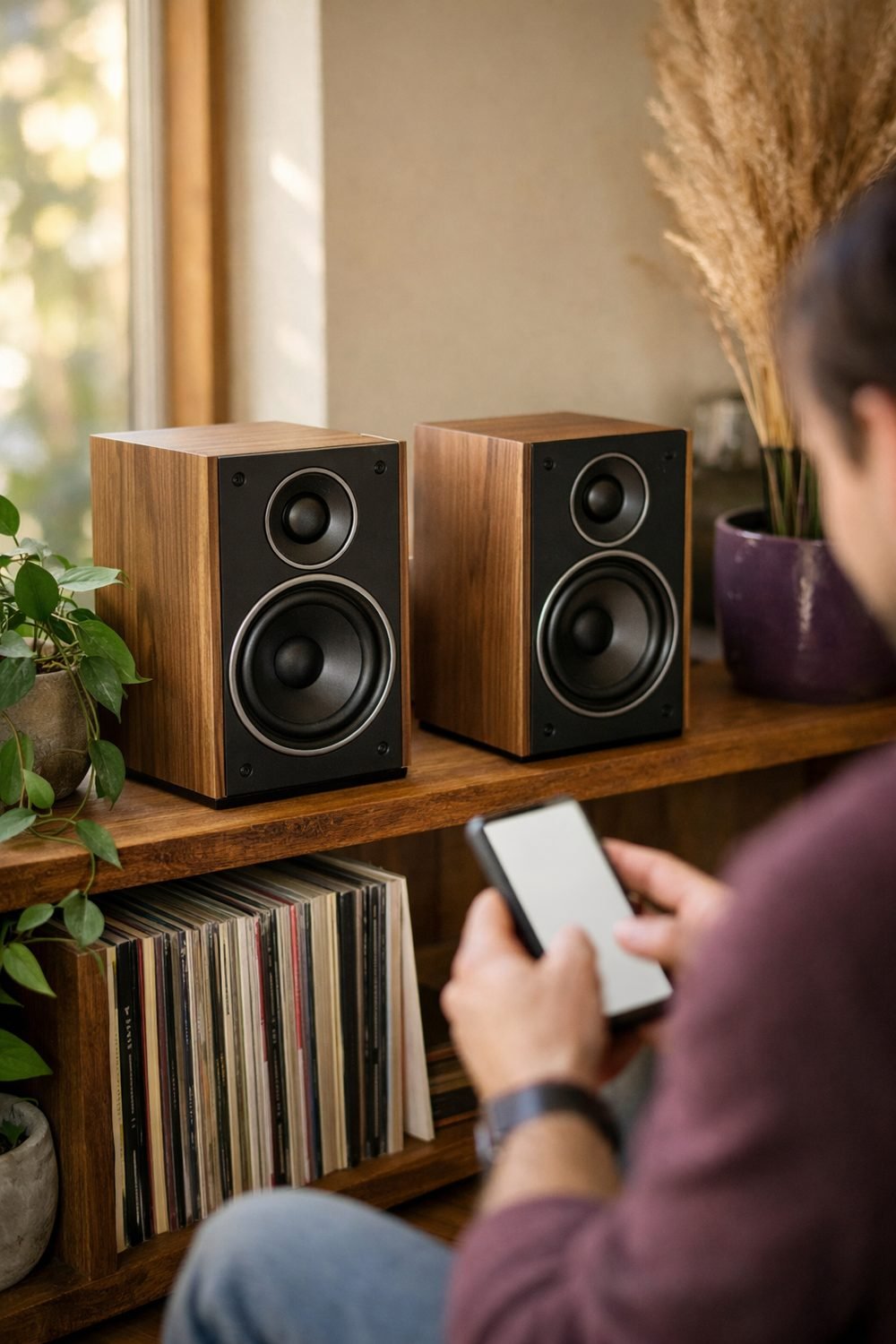
Even the best bookshelf speakers are not right for every room. It is easy to learn this the awkward way, by carrying a pair home, setting them up, and realizing a large living room swallows them whole. In my small office, though? They were perfect, and they've stayed there ever since.
So instead of telling you which model to buy, this post looks at who these speakers really suit and who would be happier with something else. That way, you can make a call before you spend money, and before you're stuck with a box you have to drag back to the post office.
Short on time? Our top picks: Edifier R1280DBs, Audioengine A2+, Kanto YU4 and Klipsch The Fives. See all picks
1. Good fit: desks and shelves for bookshelf speakers
This is where bookshelf speakers shine. They're compact enough to sit on either side of a monitor or tuck into a shelf without taking over the space. Compared to tiny laptop speakers or cheap TV speakers, the jump in sound can feel big, even at low volume.
You can use them for music while you work and for checking audio on short video clips. Having sound come from two separate points, left and right, makes a real difference. You start hearing where instruments sit in a song instead of one flat blob of noise.
Practical tip: Before you buy, measure the space you plan to use, including depth. A lot of these speakers are deeper than they look in photos, and some have ports on the back that need a few inches of breathing room. Check the dimensions on the seller's page, then grab a tape measure.
2. Good fit: people who really listen to music
If you put on an album and actually sit with it, bookshelf speakers make a lot of sense. They tend to focus on clear vocals and detail in the middle and upper sounds, which is where most of the stuff you notice in a song lives. Voices sound like voices. Guitars have a bit of texture.
To be honest, though, there are limits. If music is mostly background noise for you while you do the dishes, a decent smart speaker might be all you need. There's no shame in that. Bookshelf speakers reward attention, and if you won't give them any, you're paying for something you won't hear.
Practical tip: Try to angle both speakers slightly toward where you sit, so they point roughly at your ears. It's a small change that costs nothing, and it often makes the sound feel more centered and clear.
3. Good fit: small and medium rooms
Bedrooms, home offices, studio apartments, a cozy den. These are the spaces bookshelf speakers are built for. They fill a smaller room without needing to be cranked up, and they don't dominate the furniture.
Size matters here more than people expect. A speaker that sounds lovely three feet from your face can sound thin across a big open room. In a modest space, the sound bounces back off nearby walls and feels fuller than you'd guess from the speaker's size.
Practical tip: Don't shove them right into a corner. Corners can make bass sound boomy and muddy. Pull them a little away from walls and listen to a song you know well, then move them a few inches and listen again. Your ears are the best judge.
4. Good fit: creators working at a desk
Here's one people don't always think about. If you edit photos, cut short videos, or record voiceovers, decent speakers help you catch problems. Hiss in the background, a voice that's too quiet, music that drowns out talking. Tiny built-in speakers hide a lot of that.
Bookshelf speakers do not replace proper monitor speakers or good headphones. They don't, and I wouldn't mix a serious project on them alone. But for everyday checking, they're a pleasant middle ground. If you're building out a creative desk and still sorting out your camera, the Mirrorless Cameras Buyer's Guide and Comparison Sheets below this post might help you compare options side by side.
Practical tip: Check your work on more than one thing. Play your video on the speakers, then on your phone, then on earbuds. If it sounds okay on all three, you're in good shape.
By the way, if you like making things by hand too, you can grab the free Junk Journal Starter Pages (tags, a pocket, and a cover) when you join the email list.

5. Skip if: you want big, rumbling bass
This is the most common letdown I hear about. Bookshelf speakers are small, and small cabinets just can't move as much air as big ones. You'll get some bass, sometimes more than you'd expect, but not the kind you feel in your chest during a movie explosion.
If deep bass is what you're after, you have two choices. Go for bigger speakers, or add a subwoofer. Lots of people pair bookshelf speakers with a sub and are very happy with the result. Just know that's another box, another cable, and more money.
Practical tip: If you think you might add a subwoofer later, check whether the speakers or your amp have a subwoofer output before buying. The seller's page or the manual should say. It's much easier to plan for it now than to work around it later.
6. Skip if: you don't have an amp (and want powered speakers)
This catches people off guard. Many bookshelf speakers, such as the Q Acoustics 3020i, are "passive," which means they need a separate amplifier or receiver to power them. Plug them straight into your laptop and you'll get nothing. It is easy to figure this out on a Saturday afternoon. It was not a fun moment.
If you want something simple, look for powered speakers, such as the Edifier R1280DBs, sometimes labeled "active." These have the amp built in. You plug them into the wall and connect your phone, computer, or TV. Some have Bluetooth, some have optical inputs, some just have a basic cable connection. For most desk setups, powered is the easier route.
Passive speakers aren't bad, by the way. They give you more freedom to upgrade parts over time. But if the word "receiver" makes your eyes glaze over, skip them for now.
Practical tip: Read the product listing for the words "passive," "powered," or "active." Then check what inputs it has and make sure they match what you'll plug in. A five-minute check saves a return.
7. Skip if: your room is very large
Big living rooms, open-plan spaces, rooms with high ceilings. Bookshelf speakers can struggle here. They'll still play, but you may find yourself turning them up so high that they start sounding strained, and the music still feels far away.
That was exactly my problem. In my living room, the speakers sounded polite and small, like they were in another room. Floor-standing speakers or a larger setup tend to handle these spaces better, and in wall speakers can suit them too. Moving my pair to the office fixed everything, so it wasn't a waste, just the wrong room.
Practical tip: Be honest about where you'll listen most. If it's the couch, ten feet away in a big room, bookshelf speakers might not be your best choice. If it's your desk or bed, they probably are.
Bookshelf speakers worth a look
These are well-known options that tend to come up for small rooms and desks. Use the notes on each to decide what fits your setup before you click anything.
Edifier R1280DBs
A popular powered pair for desks and small rooms, suited to people who want a simple plug-in setup. Check which inputs it offers and whether they match your computer or TV.
Audioengine A2+
A compact powered pair that suits small desks and creative workspaces. Check the input types and make sure you have space for both speakers and their cables.
Kanto YU4
A powered option that suits people who want something tidy for a desk or shelf. Look at the stand options and the connections to be sure it works with your gear.
Klipsch The Fives
Powered speakers that suit people who want to connect a TV and a music source. Check which connection your TV supports before buying.
KEF LSX II
A wireless powered pair for listeners who care about design and music quality. Check the budget, the room size, and how the two speakers connect to each other.
Polk Audio Monitor XT15
A passive bookshelf model for people who already have an amp or receiver, or plan to get one. Confirm that your amp can power it before ordering.
Q Acoustics 3020i
A passive pair that suits music fans building a small stereo setup. Check the depth for your shelf and remember it needs a separate amplifier.
Check current plans and prices on each brand's own site before you decide.
FAQ
Can I actually put bookshelf speakers on a bookshelf?
You can, and plenty of people do. Sound is often better if the speaker sits near the front edge of the shelf rather than pushed deep inside, especially if it has a rear port. Try both and trust what you hear.
Do I need speaker stands?
Not always. Stands raise speakers closer to ear level and can reduce vibration, which some people notice and others don't. On a desk, small angled pads are a cheaper thing to try first.
Are bookshelf speakers good for TV, or should I buy wireless speakers for TV?
They can be a nice step up from built-in TV sound, especially for dialogue, though wired models need a cable run. Check that your TV has an output that matches the speakers' inputs, and remember movies may feel light on bass without a subwoofer.
Are they hard to set up?
Powered models are usually simple: power cable, audio cable, done. Passive ones take a bit more effort because of the amp and speaker wire. If you're unsure, the manual or the seller's support page is the best place to check.
If you've got a small room, a desk, and you care about how your music sounds, bookshelf speakers are worth a close look. Your next step: sign up for the free Junk Journal Starter Pages in the box on this page, then take a peek at the Photo Shoot Planner and Checklist Bundle and the camera guide below this post if you're putting together a creative space.
Printables and tools that can help
Mirrorless Cameras Buyer's Guide and Comparison Sheets
A printable guide and comparison sheets to write down what matters to you before you look at any seller...
See detailsPhoto Shoot Planner and Checklist Bundle
A printable bundle with a 30-day goal page, weekly planner and checklists for new creators and...
See details